
The primary raw material for producing wire-rope steel wire is wire rod which is supplied in coils, originally hot-rolled from round steel, which serves as the base material for wire drawing.
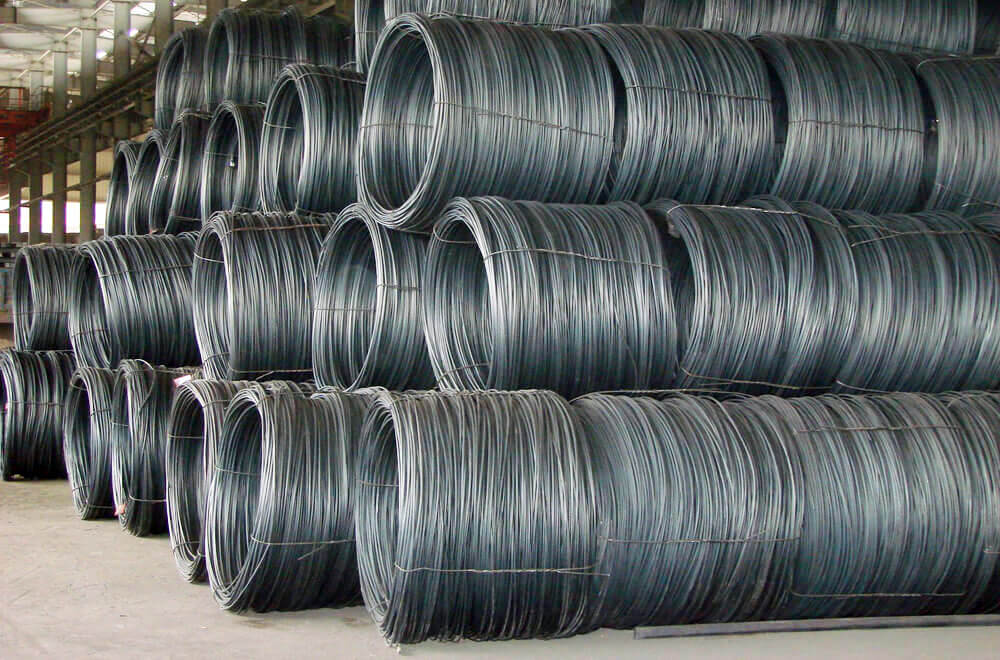
Wire rods are classified by steel grade into carbon steel and alloy steel. Those used for producing steel wire are primarily high-quality carbon structural steels. Based on production processes, they are further categorized into ordinary hot-rolled wire rods and twist-free controlled-cooling hot-rolled wire rods.
Wire rods for wire-rope steel wire are typically manufactured from high-quality carbon structural steels ranging from grade 35 to 85. Grades 45, 60, 70, 80 are the most commonly used, with carbon content generally ranging from 0.45% to 0.80%. Additionally, there are modified varieties containing trace alloying elements to meet requirements for high strength and high toughness.
The chemical composition of the wire rod directly determines the processing performance of the wire and the quality of the finished product. Key elements include:
Carbon (C): The most critical element, with a content of 0.60%–0.80%. Increasing carbon content significantly enhances the wire's strength and hardness, though excessive levels reduce plasticity and toughness.
Manganese (Mn): A strengthening element; it increases strength with minimal impact on plasticity while also neutralizing the harmful effects of sulfur.
Silicon (Si): A deoxidizer; it increases hardness and strength, though excessive content reduces plasticity.
Phosphorus (P) and Sulfur (S): Harmful elements; phosphorus causes "cold shortness" (brittleness at low temperatures), while sulfur causes "hot shortness" (brittleness at high temperatures). Their levels must be strictly controlled (generally ≤0.035%).
As the raw material for wire drawing, wire rod must meet the following requirements:
Microstructure: Predominantly sorbitic, to minimize the number of annealing steps required during cold drawing.
Surface Quality: Smooth and defect-free, with a thin, easily removable oxide scale.
Dimensional Accuracy: Typically 5–9 mm in diameter, with strict tolerance control.
Compositional Uniformity: Stable and consistent chemical composition and mechanical properties.
In short, wire rod serves as the base material for steel wire rope production. The choice of grade, composition control, and microstructural state directly determine the strength, toughness, and service life of the final wire rope.